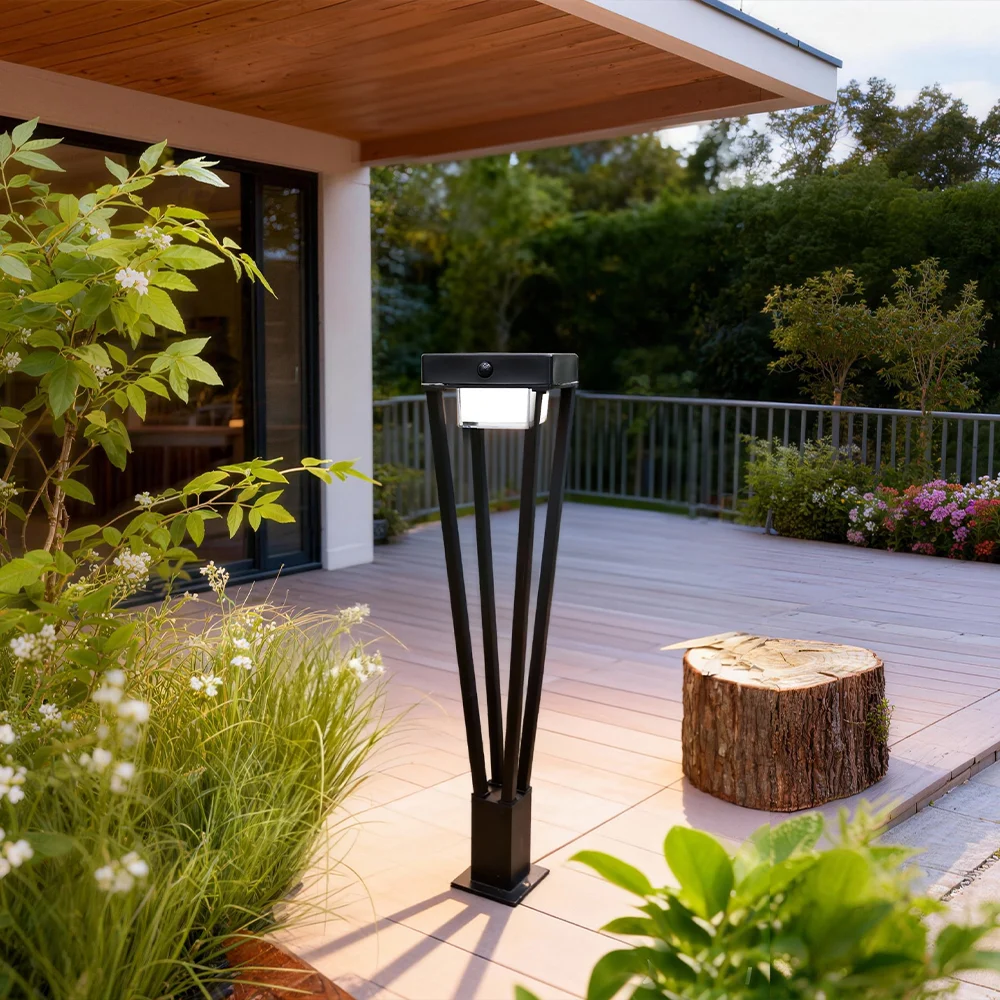
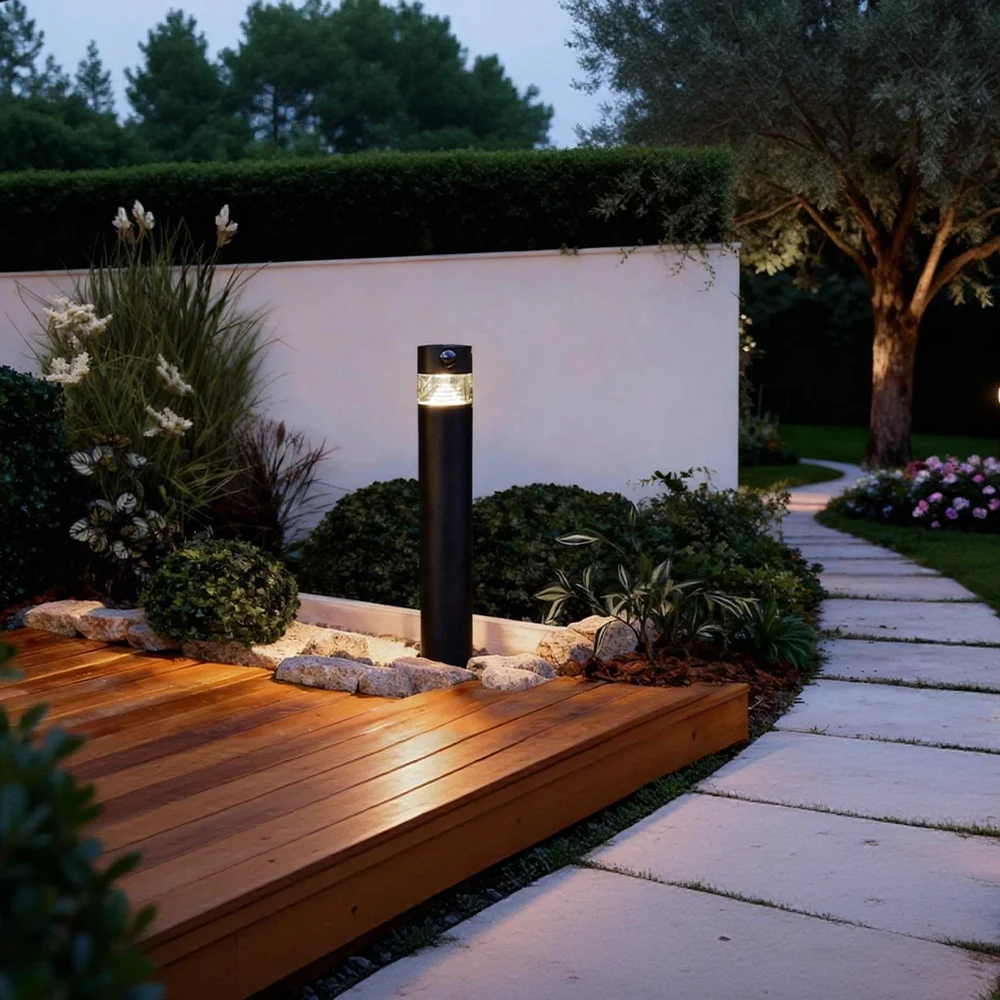
You wonder if a outdoor solar wall wall lamp Can you light up your terrace, entrance or driveway? Spoiler: yes... but if you choose it well. Between low-end models that drop off after a summer and the more efficient but technical solutions, you can quickly get lost. So to avoid bad surprises, here's what you really need to look at.
Choosing a solar applicator is not just a choice of luminaires. It is a tradeoff between aesthetics, performance, durability and ease of installationAt Lumihome, we design products that aim at this balance, without compromising reliability, and we'll show you how to find it.
The 5 technical criteria should not be overlooked
Battery life: don't trust the first promise
On paper, almost all solar appliqués announce record autonomys. But in fact, everything depends on the capacity of the battery, the type of solar cell, and especially the seriousness of the manufacturer.
Prefer lithium battery (Li-ion) for better longevity, and check customer reviews to avoid models that struggle to hold until midnight from the second week.
"Alternance is often what betrays the quality of a app. A good battery and a well-designed electronic is the key to avoid breakdowns after a few weeks."
Light power: look at lumens, not watts
A classic trap: to confuse watts with efficiency. It is not the consumption that counts, but what the applied actually produces in light.
At Lumihome, some new appliqués are now reaching 1000 lumens, or a level of lighting comparable to 230V wired, without electrical installation. A major step forward for those who want both performance and simplicity.
To light up:
-
100 to 300 lumens: soft atmosphere
-
400 to 700 lumens: traffic, access, terrace
-
800 to 1000 lumens: security, wide areas, garages
The motion sensor: a real plus... if it's well calibrated
The motion sensor is the element that turns a classic applicator into a real safety tool.
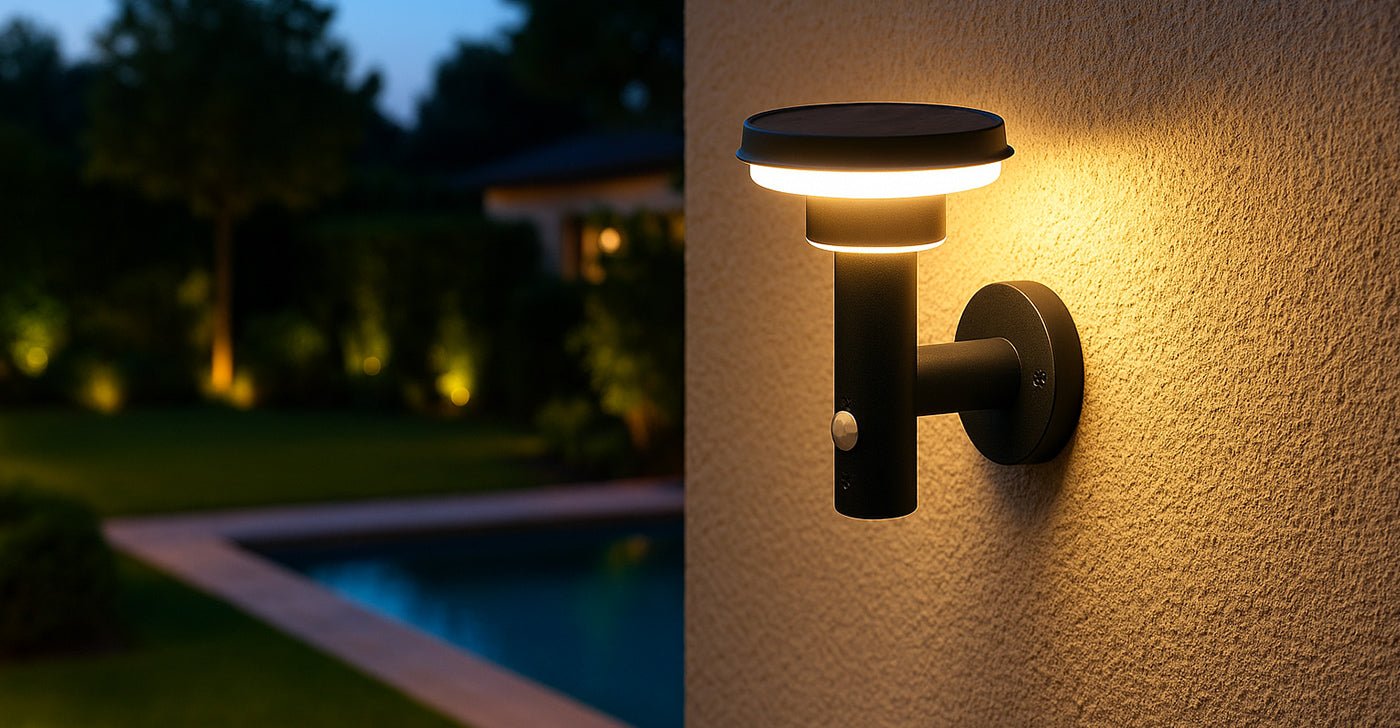
A good passive infrared detector (PIR) enables the lamp to be lit as soon as a presence is detected, without any unexpected trigger.
At Lumihome, the system dSelf-calibration automatically adjusts the sensitivity to avoid unwanted ignitions. Real comfort.
IP Index: Your Best Protection Against Bread and Gas
You're installing a applicator outside? Never below the IP index44, which guarantees minimum protection against water projections.
Below, you risk infiltration and short circuits from the first heavy rain.
Quality of materials: design and durability make a good fit
Behind a beautiful solar applique, there is often a real engineering job. Perfect sealing, robust fastenings: these details, invisible on photo, make all the difference.
Hence the importance of choosing a recognized manufacturer, who designs his products to last — not to be replaced every summer.
A well thought out applicator, it is also a applicator that keeps its appearance over the seasons, without yellowing, without playing in the fixations, and without loss of luminous efficiency.
I'm sure you won't want to talk a little bit about our company :) But this is, of course, a subject I know well because, at Lumihome, we have our own factory and manufacturing processes that are always more demanding. For example, we have invested in a very modern machine that allows us to test the waterproofness of our products before they are marketed. Similarly, to ensure the durability of our solar appliqués, we apply UV treatment on translucent parts so that they do not yellow off. A multitude of details that make a real difference over time.
Design and location: think about usage before style
Choosing a solar applic is not just a matter of look. First of all, you have to think about the use, and this starts by defining the space to be illuminated.
Use: usefully illuminate, without shadow zones
On a terrace, you often aim for a warm atmosphere: a 2.5 to 3 metre application is usually enough. Along a walkway, you will prefer rhythmic and functional lighting: think about laying your appliqués at about 1.5 metres from the ground, every 2 to 3 meters to ensure a luminous continuity. And if the objective is safety (garage, side access), opt for a higher pose with a high intensity (700 lumens and more).
Orientation: for optimal load
Also think about the exposure. For optimal operation, your appliqués must be oriented south or west, without prolonged shade in the day. Good sunshine is essential for the battery to recharge completely.
Style: What your walls want in 2025
On the design side, current trends are moving away from the "tech" style to more architectural and sober forms. Matt black finishes and graphic lines have the rating, just like compact formats and bevelled appliques that play with indirect light.
At Lumihome, our latest collections rely on this discreet elegance : luminaires that fit into the facade, without taking over, but that make all the difference once the night falls.
"The idea is that the customer no longer had to choose between aesthetics, durability and performance," explains Christophe Coelho, founder of Lumihome. "We design each product to meet all these criteria, without compromise."
Give light to your outsides... long-lasting
Choosing a solar appliqué is not a check-box. It's offering reliable light, without extra cost, with a real style. And at Lumihome, each model is designed to last — and to simplify your life.
 DELIVERY €11, FREE FROM €150 OF PURCHASES IN FRANCE