
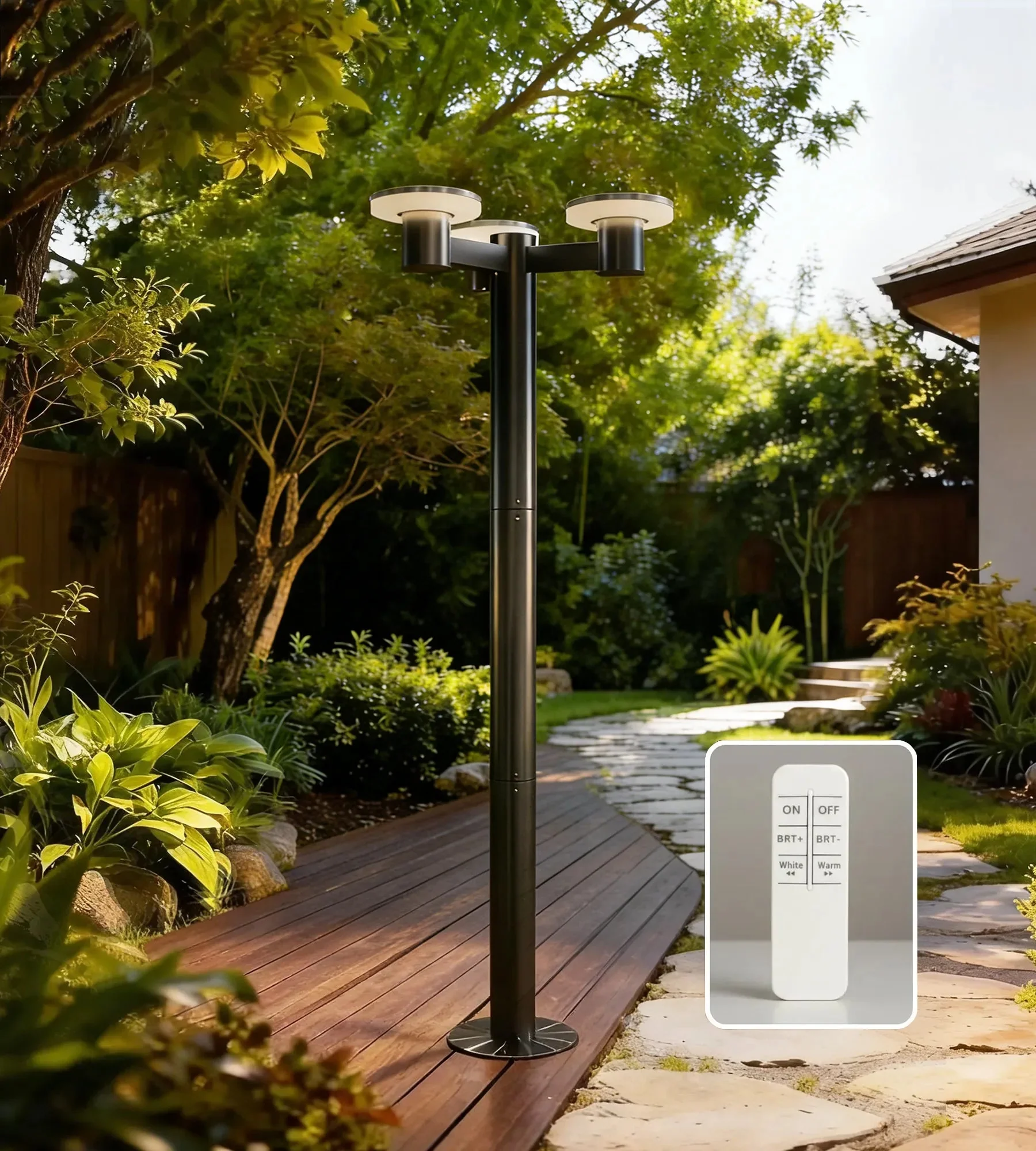
Solar outdoor lighting has come a long way. Modern fixtures use monocrystalline panels, lithium batteries, and motion sensors to deliver lighting that rivals — and often outperforms — wired alternatives. But the catalogs are crowded. Here's how to choose well.
1. Lumens · how bright?
A solar bollard for a garden path: 75–150 lumens is plenty. For a wall light over a front door: 400–1,000 lumens. A floodlight on a driveway: 1,500–1,800 lumens. Anything advertising "2,000 lumens" on a small panel is probably overstating — physics caps what a 6V panel can charge.
2. IP rating · weatherproofing
IP65 is the practical minimum for outdoor lighting: protected against dust ingress and water jets from any direction. IP67 adds protection against immersion — only needed for pool surrounds.
3. Battery · runtime that lasts
Lithium beats NiMH. Look for replaceable batteries (Lumihome's ALTO line, for example). Cycle life matters more than initial capacity: a 1,200 mAh battery rated for 1,000 cycles will outlast a 2,000 mAh that dies after 300.
4. Motion sensor · the smart way to ration energy
Three-mode sensors (high · low · auto-dim) are the sweet spot: the light sits at 15% glow, jumps to 100% on motion, drops back. You get all-night autonomy and a bright welcome when you arrive.
5. Where to mount
Panel orientation matters more than spec sheets suggest. South-facing, minimal shade, tilt angle = local latitude. A €100 fixture in shade performs worse than a €30 fixture in full sun.


